
The history of SAP: it all started with a small restaurant
Five engineers left IBM in 1972 and founded SAP. From R/2 and R/3 to S/4HANA, here's how SAP became the standard for ERP, explained for beginners.
Hi, this is Rabbit! 🐰
In SAP for beginners: the integrated brain behind a restaurant kitchen, we looked at how SAP is “the integrated system that runs a company.” But where did this massive system actually come from? Today’s a bit of a breather — let’s trace SAP back to where it started. Knowing the backstory makes it easier to understand why SAP looks the way it does today.
- SAP was founded in Germany in 1972 by five engineers who left IBM.
- It started from a goal that was radical for its time: real-time data processing.
- It evolved from R/2 to R/3 to S/4HANA, becoming the global standard for ERP.
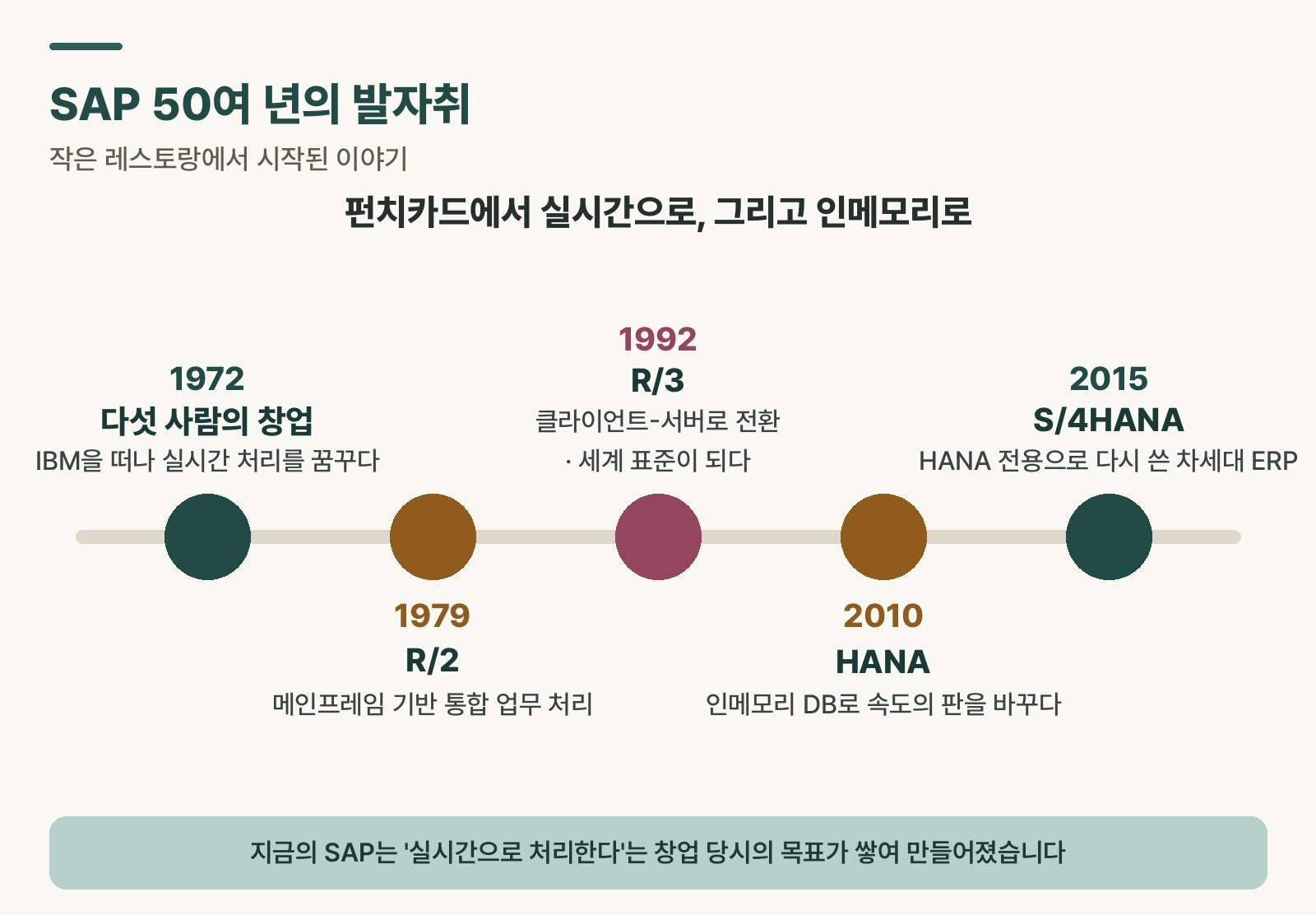 Figure 1. SAP’s major milestones over 50-plus years
Why five people left IBM
In 1972, five engineers working at IBM walked out. Dietmar Hopp, Hasso Plattner, Klaus Wellenreuther, Klaus Tschira, and Hans-Werner Hector. They shared one idea.
At the time, companies built a separate program for every task — one for accounting, one for inventory, one for sales. Every company kept reinventing similar software from scratch, and the inefficiency was enormous. The five of them thought: what if we built standard software that integrated these tasks and processed data in real time?
They’d actually been doing this kind of work at IBM for a client, but when IBM moved to hand the project off to another division, they chose to strike out on their own instead. That’s how a company called SystemAnalyse Programmentwicklung (System Analysis and Program Development) was born in Germany. The initials of that German name are exactly where “SAP” comes from.
From punch cards to real time
In a word, early SAP’s goal was real-time processing. That’s why the first product was called RF, later renamed R/1 — the “R” stands for Real-time.
It sounds obvious now, but back then data was entered by punching holes into cards and processed in batches overnight. Getting a result the moment you entered something was a genuine innovation. In restaurant terms, it’s the difference between jotting down the day’s sales and remaining ingredients in a ledger and tallying it all up after closing, versus having every single event update the whole restaurant’s books — kitchen, register, storeroom — the instant it happens.
R/2 and R/3: becoming the standard
Two leaps put SAP’s name on the map worldwide.
R/2, released in 1979, ran on IBM mainframes (large-scale computers) and added functions like materials management, production planning, and HR, giving SAP the shape of a genuine integrated system. It spread beyond Germany across Europe.
R/3, released in 1992, was the turning point. Instead of a single massive mainframe, it introduced a “client-server” structure where multiple computers split the work among themselves. More flexible and easier to scale, R/3 became the global ERP standard for companies everywhere. This is when the basic skeleton of the SAP we know today was built.
HANA and S/4HANA: SAP today
SAP reinvented itself again after the 2000s.
HANA, introduced in 2011, is “in-memory” technology that processes data in memory instead of on disk. Analysis that used to take days shrank to seconds. Then, in 2015, S/4HANA arrived — a system fully redesigned to run on top of HANA. It’s the version many companies are adopting or preparing to migrate to right now.
The real-time starting point of R/1 has, more than 50 years later, become even faster through in-memory technology. The direction never changed — it just kept accelerating.
Rabbit’s Takeaway
SAP’s history boils down to one line: bring scattered work together, and process data in real time. The idea five people held onto in 1972 is still exactly the idea driving SAP today.
Behind the complicated SAP screens we use every day is a simple, stubborn idea: bring a company’s work together as one. Once you know that bigger picture, even the unfamiliar screens start to look a little different. 😎
Read more