
SAP change management: the staff has to change before the new kitchen opens
Explains why work actually gets harder early in an SAP rollout, what the change resistance curve is, and three change management strategies, using a restaurant operations transition analogy.
Hi, this is Rabbit! 🐰
An old neighborhood diner has finally transformed into a modern restaurant. High-end equipment moved into the kitchen, tablet ordering systems went in on the floor, and inventory is now handled through new software.
But in the first week after opening, the kitchen is actually more chaotic. Nobody can find the old handwritten recipe notes, staff keep making mistakes entering orders into the new system, and people keep saying “it was so much easier before.”
This scene plays out over and over in SAP rollouts. The system changed, but the people weren’t ready for it. SAP change management is the work that closes that gap.
- Early in an SAP rollout, workload doesn’t decrease — it actually increases. This is normal.
- Every team member goes through the change resistance curve: shock → resistance → acceptance → integration.
- Change management runs on three pillars: honest communication, education focused on the “why,” and cultivating internal champions.
Why things get harder right after SAP goes live
Many people expect that adopting SAP will immediately make work easier. Reality is different.
Think about a restaurant right after switching to a new kitchen. The equipment changed, but staff still have to learn how to use the new gear, menu entry works differently now, and order flow has changed too. Things that used to be handled by feel now have to be entered into the system precisely.
SAP is the same. Information that used to be jotted loosely into an Excel sheet now has to be entered accurately in a fixed format. Data that used to live in someone’s personal notebook is now something you look up in the system. In the short term, workload goes up and mistakes happen more often.
This isn’t a sign that the rollout went wrong. It’s a phase you inevitably pass through while building more accurate, integrated data.
The change resistance curve: the emotional stages staff go through
Watching enough SAP rollouts, you notice team members go through a similar emotional arc. This is called the change curve (change resistance curve).
Mapped onto the restaurant transition, it flows like this.
Stage 1 — Shock and denial: “Our kitchen was running fine — why are we changing this? I liked the old way better.” When change is announced, people initially avoid facing it.
Stage 2 — Anger and frustration: Confusion sets in once the new system is actually in use. “Why is this tablet ordering system so slow? Just telling the kitchen out loud was way faster!” This is the period when productivity drops the most.
Stage 3 — Exploration and acceptance: “Well, it’s changed either way, guess I’ll try using it.” Half resignation, half curiosity, people start learning the system. Small wins build up and familiarity grows.
Stage 4 — Integration: “How did we ever work without the new system?” The new way is fully embedded, and people would rather not go back to the old way.
💡 Key point: Knowing this curve lets you recognize “we’re currently going through stage 2.” Just knowing that everyone goes through this eases the psychological burden on the ground.
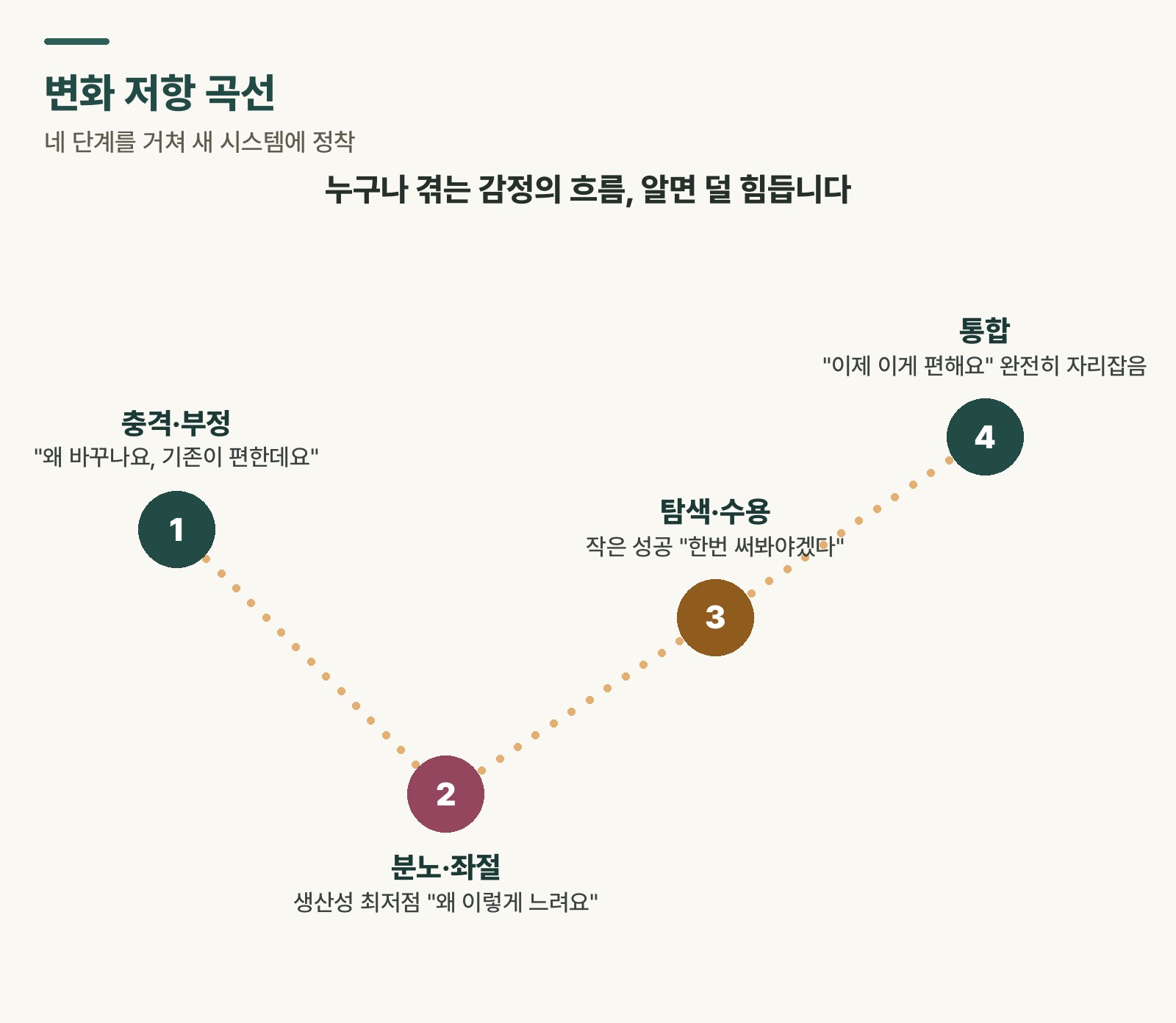 Figure 1. The change resistance curve team members experience during an SAP rollout
Three change management strategies
Strategy 1: Honest, transparent communication
Saying “everything gets easier once SAP is in” erodes trust later. It’s better to say upfront that things will actually be hard at first.
In restaurant terms, this means telling staff in a pre-opening meeting: “The first month will mean some mistakes and slower service while we get used to the new ordering system. That’s normal, and if we push through it together, things will get much smoother after that.”
This kind of honest heads-up creates recognition later, when the hard part actually arrives: “ah, this is the stretch they told us about.” A vague fear turns into a predictable stage.
Strategy 2: Education that explains the “why”
Training at the level of “click this button on this screen” works in the short term but isn’t enough for change management. What matters is “why this has to be done this way.”
“Accurate inventory entry lets MRP generate the right purchase orders. Correct MRP means ingredients arrive on time. Ingredients arriving on time means today’s menu can go out.” Once people see how their action connects to the bigger picture, even simple data entry starts to feel meaningful.
⚠️ Note: Training shouldn’t happen just once, right before go-live. There needs to be ongoing support available after launch, so people can ask questions that come up as they actually use the system.
Strategy 3: Cultivating internal champions
There are always a few team members who adapt to change faster than others. Finding them and giving them authority and a role is the change champion strategy.
Champions do something an outside consultant can’t. A coworker saying “I found it really awkward at first too, but here’s how I made it work” carries more weight than a 100-page manual.
Give champions early access to training, and a formal role in answering their peers’ questions. That builds the champion’s own capability while also speeding up how quickly the change spreads on the ground.
Change management isn’t optional
In many projects, change management is the first thing cut when budget runs short. But if an SAP system that cost several times the build budget ends up rejected on the ground, that whole investment goes to waste.
Think about spending a fortune on restaurant interior and equipment, then skipping staff training and opening preparation. No matter how good the equipment is, if staff don’t know how to use it and customers are inconvenienced, the place eventually closes.
SAP change management isn’t a cost. It’s the last piece of the puzzle that makes the money spent on the build actually work on the ground.
Rabbit’s Takeaway
Ask people who’ve used SAP for a long time, and you hear the same thing over and over: “I really hated it at first, but now I can’t work without it.”
Change management is what shortens that “really hated it at first” period and helps people push through it. People’s readiness matters as much as the system’s completeness. No matter how good the new kitchen equipment is, the food only comes out if the staff are comfortable using it. 😎
Read more